Is TikTok Worth It for E-Commerce Brands?
TikTok drives real e-commerce revenue for brands with visual products and a story that works in short video. Here is when it makes sense and when to skip it.
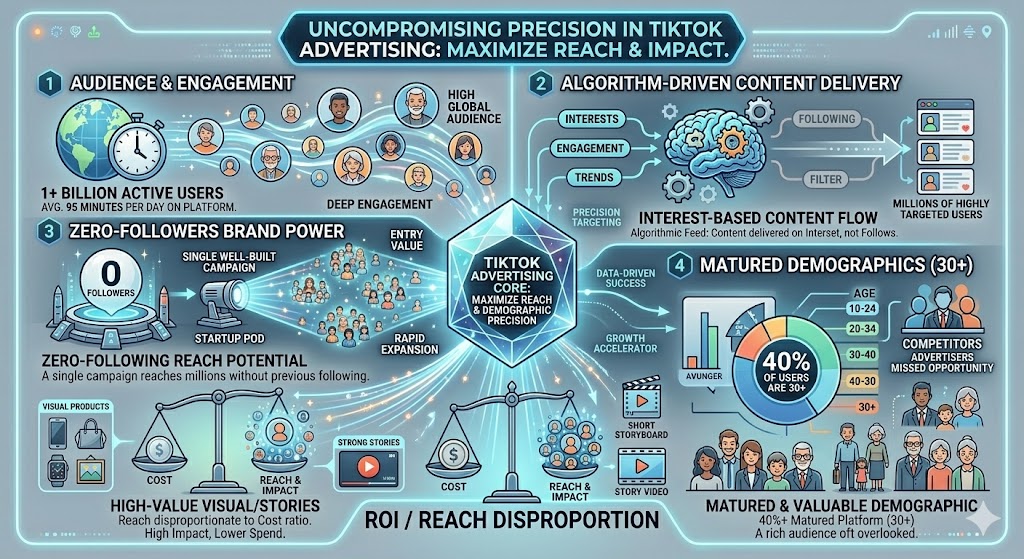
TikTok Ads reach a younger, highly engaged audience with short-form video that drives brand awareness and direct conversions.
For the right product categories, yes. TikTok is no longer just a brand awareness play.
TikTok Shop integration lets users purchase directly within the app, and In-Feed ads with product links drive measurable e-commerce revenue for brands whose products have a visual story.
The question is not whether TikTok works for e-commerce in general. It clearly does. The question is whether it works for your specific product, and that depends on a few things that are worth thinking through before committing budget.
The products that perform best on TikTok share a few characteristics. They have a visual demonstration that is more compelling than a static product image.
A before-and-after, a satisfying transformation, a product in use that makes the benefit immediately obvious. Home goods, beauty, food, specialty apparel, organizational tools, pet products.
These categories convert on TikTok because the video format does the selling.
A product that looks the same in every shot and requires reading a spec sheet to understand the value proposition will struggle on TikTok regardless of how good the targeting is.
The CPCs on TikTok are generally lower than Meta for comparable audiences, which makes it an attractive testing ground for brands that are already profitable on Google and Meta and want to expand reach. The creative requirement is the real barrier.
TikTok rewards content that looks native to the platform, meaning authentic, relatively unpolished, and structured for the first two seconds to stop a scroll. Repurposing a Meta or Google ad for TikTok rarely works.
The platform needs content built specifically for it, which means either producing that content in-house or working with creators.
The brands that should not prioritize TikTok are ones selling commodity products without a visual differentiator, B2B products, or anything where the purchase decision is long and research-heavy.
A plumber, a B2B software company, or a brand selling a product indistinguishable from a hundred other listings on Amazon is not going to find a meaningful audience on TikTok that converts better than Google Search or Amazon.
The platform should match how your customer discovers that your product exists. If they would search for it, Google is the right channel. If they would stop scrolling when they saw it, TikTok is worth testing.