How Does Meta Ads Targeting Work?
Meta Ads targeting has changed significantly since iOS 14. Here is how interest targeting, lookalike audiences, and broad targeting work now and which delivers the best results.
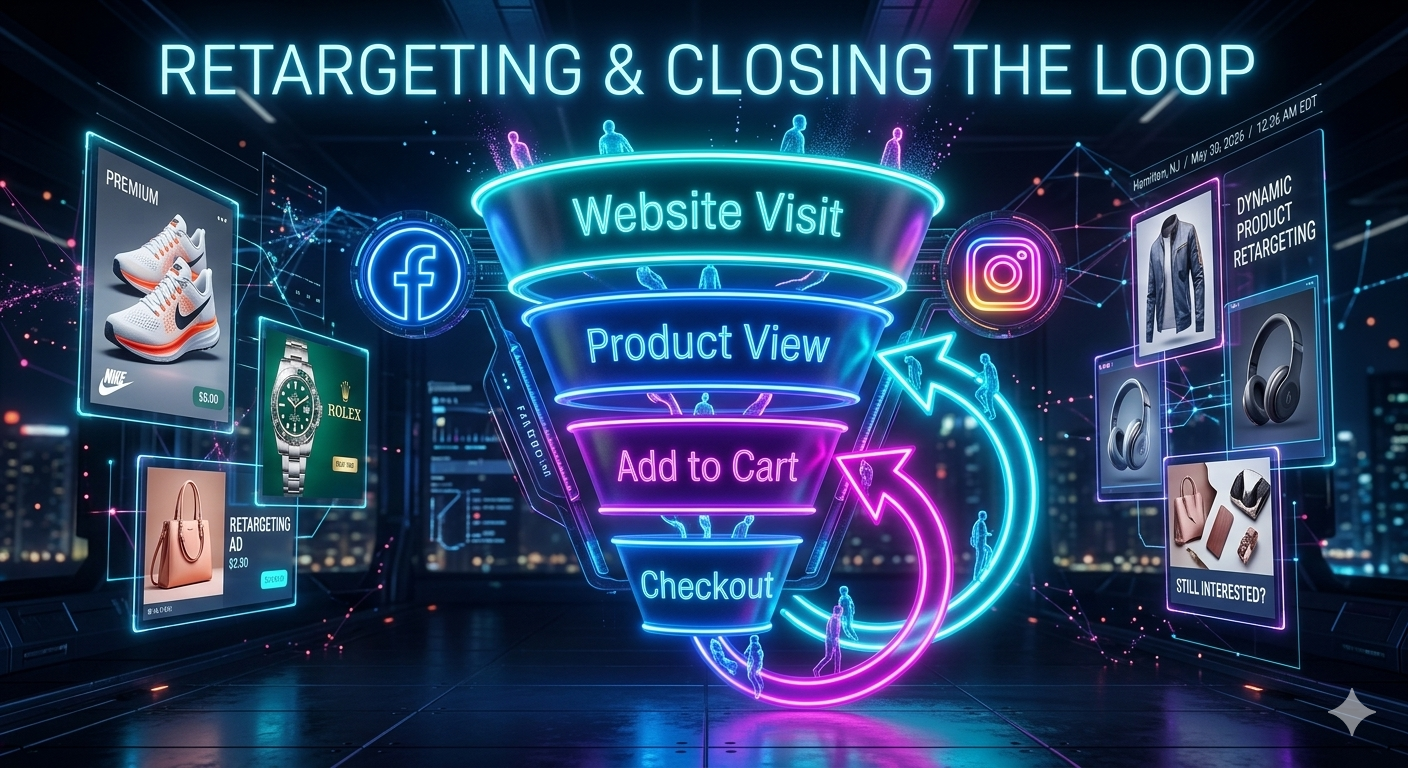
The full Meta funnel: cold audience prospecting, warm retargeting, and dynamic product ads that close sales.
Meta Ads targeting works by matching your ads to people based on their interests, behaviors, demographics, and their relationship to your business.
You define an audience when building a campaign, and Meta shows your ads to the people within that audience who its algorithm predicts are most likely to take your desired action.
The targeting options fall into three broad categories: interest-based targeting, custom audiences, and lookalike audiences.
Interest-based targeting lets you reach people who have engaged with specific topics, pages, or content categories on Facebook and Instagram.
You can target people interested in home improvement, gardening, specific brands, or hundreds of other categories.
This is the most accessible targeting option and the right starting point for new advertisers, but it has become less precise over time as Meta has broadened some interest categories and as iOS privacy changes have reduced the behavioral data available.
Interest targeting is a starting point, not a long-term strategy.
Custom audiences are built from your own data: your customer list, website visitors tracked by the Meta Pixel, people who have engaged with your Instagram content, or video viewers.
These audiences are more valuable than interest audiences because they are based on real demonstrated behavior rather than inferred interests.
A custom audience of people who visited your checkout page but did not complete a purchase is one of the highest-value audiences in all of digital advertising, because those people have already self-selected as serious buyers.
Lookalike audiences use your custom audiences as a seed and find new people who share similar characteristics with your best customers.
A one percent lookalike of your customer list targets the one percent of the population in your selected country that most closely resembles your actual buyers.
These consistently outperform interest-based targeting for most established brands because they are based on real purchase behavior rather than content engagement.
Broad targeting, with minimal audience restrictions and maximum algorithmic freedom, has become increasingly competitive as well for accounts with strong Pixel data and sufficient conversion volume.