What Is a Meta Ads Funnel and Why Does It Matter?
A Meta Ads funnel separates cold, warm, and hot audiences with different messaging and objectives. Here is why structure matters more than budget on Meta.
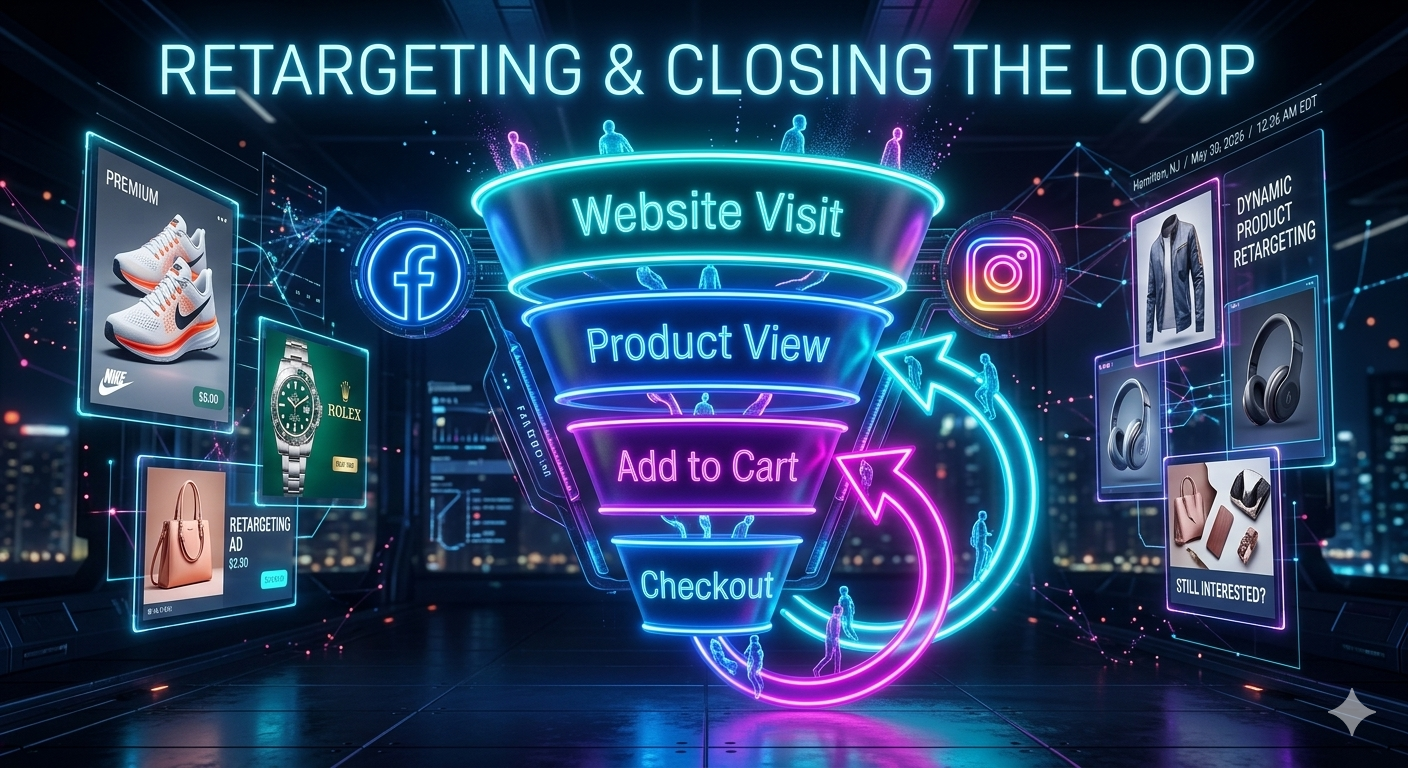
The full Meta funnel: cold audience prospecting, warm retargeting, and dynamic product ads that close sales.
A Meta Ads funnel is a campaign structure that separates audiences by their relationship to your business and delivers different messaging to each. Cold audiences have never heard of you.
Warm audiences have visited your site or engaged with your content. Hot audiences have added to cart, initiated checkout, or viewed a specific product multiple times.
Each group needs a different ad, a different objective, and a different call to action, because what would convince a cold audience to stop scrolling is very different from what would close a sale with someone who already put something in their cart.
Most underperforming Meta accounts are running one or two campaigns with broad targeting and hoping the algorithm sorts it out.
The algorithm is capable of a lot, but it performs better when you give it clear signals about what each campaign is trying to accomplish. A campaign with a cold prospecting objective optimizes toward finding new people who resemble your customers.
A retargeting campaign with a conversion objective optimizes toward getting a specific action from people who already know you. Running these together with shared budgets forces the algorithm to make trade-offs that hurt performance on both ends.
The creative that works at each funnel stage is also different. Cold audience creative needs to interrupt the scroll, establish who you are, and create enough interest for someone to click or engage.
This requires a clear visual hook, a strong opening line, and a benefit-focused message. Warm and hot audience creative can be more specific because those people already have context.
A retargeting ad that says 'You left this in your cart' or shows the exact product someone viewed converts at a much higher rate than a generic brand awareness ad shown to the same person.
Budget allocation across the funnel stages should reflect where your revenue actually comes from. For most e-commerce brands, retargeting campaigns generate the highest ROAS because they reach people who have already demonstrated purchase intent.
Cold prospecting campaigns generate the lowest ROAS but are essential for filling the funnel with new potential customers.
A common mistake is over-investing in retargeting to keep ROAS high in the short term while starving the prospecting campaigns that feed future retargeting audiences.